What Is a Jigsaw Puzzle? The Comprehensive Guide to History, Types, and Benefits
In an age dominated by high-speed internet and instant gratification, the humble jigsaw puzzle remains a steadfast titan of leisure. It is a pastime that transcends generations, finding a home on the coffee tables of both toddlers and retirees. But have you ever stopped to consider what actually defines a jigsaw puzzle, where it came from, or why our brains find fitting those odd-shaped pieces together so incredibly satisfying?
From the dissected maps of the 18th century to the 3D architectural marvels of today, the world of puzzles is vast. Whether you are looking for the best creative toys to develop a child’s mind or a 2,000-piece challenge to unwind after work, understanding the mechanics and history of the puzzle enriches the experience. In this guide, we dive deep into the definition, the history, and the surprising benefits of the jigsaw puzzle.
What Is a Jigsaw Puzzle?
At its core, a jigsaw puzzle is a tiling puzzle that requires the assembly of numerous small, often oddly shaped, interlocking and tessellating pieces. Each piece usually has a small part of a picture on it; when complete, a jigsaw puzzle produces a complete image.
The term “jigsaw” comes from the special saw used to cut the puzzles in the historic era (more on that later), though modern puzzles are largely die-cut using massive hydraulic presses or lasers.
The Anatomy of a Piece
Most standard jigsaw puzzles utilize a cut style known as “strip-cut,” where pieces are aligned in a grid but have irregular edges. The iconic shapes usually consist of:
- Tabs (or Knobs): The protruding parts of the piece.
- Blanks (or Holes): The indentations that receive the tabs.
- Edge Pieces: Pieces with at least one straight side, forming the border.
However, not all puzzles follow this rule. “Random cut” puzzles feature chaotic shapes that do not follow a grid, adding a significant layer of difficulty for adults.
Difference Between “Jigsaw Puzzle” and “Puzzle”
The words are often used interchangeably, but is there a difference? Absolutely. “Puzzle” is the umbrella term, while “Jigsaw” is a specific sub-genre.
A puzzle is any game, toy, or problem designed to test ingenuity or knowledge. This includes crosswords, Sudoku, mechanical disentanglement puzzles (like metal wire teasers), and logic problems. A jigsaw puzzle specifically refers to the physical assembly of a fragmented image.
Comparison: Jigsaw vs. Other Puzzle Types
| Feature | Jigsaw Puzzle | Logic/Mechanical Puzzle |
|---|---|---|
| Goal | Reassemble a fragmented image | Solve a specific problem or pattern |
| Primary Skill | Visual-spatial processing, pattern recognition | Deductive reasoning, mathematics, logic |
| Materials | Cardboard, Wood, Acrylic | Paper, Metal, Plastic (e.g., Rubik’s Cube) |
| End Result | A static picture | A solution state or answer |
While a Rubik’s cube is a puzzle, it is certainly not a jigsaw. Conversely, are all puzzles jigsaw puzzles? Definitely not. However, the jigsaw remains the most popular form of tabletop puzzle worldwide.

Challenge Your Brain
Ready to test your skills? Try a 1000-piece gradient puzzle that relies purely on color theory rather than image details.
Check Price on AmazonThe Fascinating History of the Jigsaw Puzzle
The history of the jigsaw puzzle is a journey from the geography classroom to the living room floor. It began not as a toy, but as an educational tool.
1760s: The Birth of the “Dissected Map”
The credit for the first jigsaw puzzle goes to John Spilsbury, a British cartographer and engraver. Around 1760, Spilsbury mounted a map of Europe onto a thin sheet of hardwood and used a marquetry saw to cut along the national borders. He called these “Dissected Maps.”
These early puzzles were used by the children of King George III and other elites to learn geography. If you couldn’t put the map back together, you didn’t know your geography! This educational root is why puzzles are still staples in classrooms today, often compared to Montessori toys for their ability to teach spatial relationships through hands-on manipulation.
The 1900s: The Shift to Cardboard
For over a century, puzzles were made of wood and were prohibitively expensive for the working class. It wasn’t until the late 19th and early 20th centuries, with the improvement of lithographic printing and die-cutting technology, that cardboard became the material of choice.
During the Great Depression in the 1930s, jigsaw puzzles saw a massive boom. They were cheap, reusable entertainment that an entire family could enjoy together. It was during this era that the term “Jigsaw” became popularized, named after the tool used to cut the intricate wooden versions that were still considered premium items.
Types of Puzzles: From Toddlers to Experts
Today, the variety of puzzles available is staggering. They are categorized not just by piece count, but by material, dimensionality, and mechanism.
1. Wooden Puzzles (The Heirloom Choice)
While cardboard is common, wooden puzzles are making a comeback. They are durable, offer a satisfying tactile “clunk” when pieces fit, and often feature “whimsies”—pieces cut into the shapes of recognizable objects like birds, stars, or animals. When discussing durability, the debate is similar to wooden toys vs. plastic toys; wooden puzzles are investments meant to be passed down.
2. 3D Puzzles
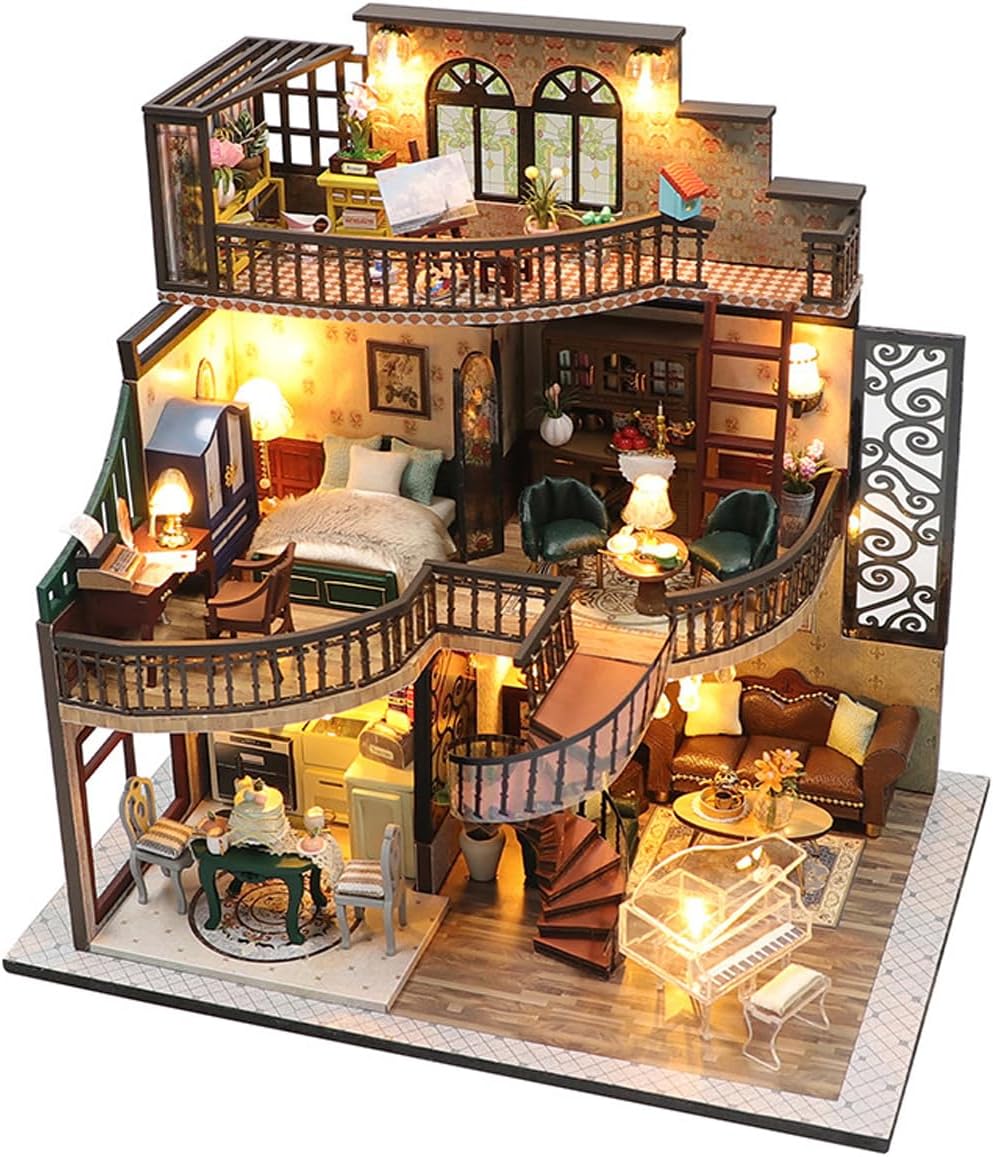
Moving beyond the flat surface, 3D puzzles allow you to construct famous landmarks, castles, or globes. These often use foam-backed pieces that slot together without glue. For children who love building, these bridge the gap between traditional puzzles and construction sets. For instance, a 3D puzzle of a castle pairs wonderfully with interests in Disney Princesses or Cinderella themes, bringing fantasy to life in three dimensions.
3. Floor Puzzles (For Kids)
Giant pieces, durable materials, and engaging imagery define floor puzzles. These are excellent for gross motor skills and cooperative play. If you are looking for age-appropriate options, check out our guide on pretend play toys for 4-year-olds, where puzzles often play a supporting role in thematic playrooms.
4. Mystery and “Wasgij” Puzzles
For adults who find standard puzzles too easy, mystery puzzles offer a twist. In a “Wasgij” (Jigsaw spelled backward) puzzle, the image on the box is not what you puzzle. Instead, you must puzzle what the characters in the box image are looking at. It requires imagination and deduction.
5. Gradient and Impossible Puzzles
These are the ultimate test of patience. A gradient puzzle might be a slow shift from blue to red with no distinct lines. “Impossible” puzzles might feature repeating patterns (like baked beans or piles of shredded paper) or have no straight edges at all.

Build Your Own Kingdom
Experience the magic of architecture with this intricate 3D puzzle. No glue required!
Check Price on AmazonChoosing Puzzles Based on Interests
One of the best ways to get someone hooked on puzzling is to align the image with their passions.
Sci-Fi and Space
NASA imagery and deep space nebulas make for stunning, albeit difficult, puzzles. The stark black of space challenges the eye. If your child is fascinated by the cosmos, pairing a solar system puzzle with the best space toys creates a comprehensive educational environment.
Fantasy and Adventure
From maps of Middle Earth to pirate treasure charts, fantasy puzzles are evergreen. A puzzle featuring a high-seas adventure is a great rainy-day activity to accompany pirate toys. Similarly, intricate castles or fairy glens appeal to those who love folklore. Understanding the lore, such as the difference between a pixie and a fairy, adds a layer of appreciation to the artwork found in these fantasy puzzles.
Pop Culture
Modern puzzles often feature movie posters or franchise collages. Whether it is Disney Villains for a spooky challenge or a collage of famous Disney dresses, these puzzles serve as collectibles for fans.
The Cognitive Benefits of Puzzling
Puzzles are more than just a way to pass time; they are a workout for the brain. Neuroscientists have found that puzzling activates both the left (logical) and right (creative) hemispheres of the brain.
- Short-term Memory Improvement: Remembering colors and shapes to visualize where they might fit reinforces neural connections.
- Dopamine Production: Every time you successfully place a piece, your brain releases dopamine, a neurotransmitter that regulates mood and optimism.
- Meditation and Stress Relief: The singular focus required for puzzling induces a state of meditation, lowering blood pressure and heart rate.
- Visual-Spatial Reasoning: This is crucial for driving, packing, and using a map. Puzzling improves your ability to estimate spatial management.
For children, these benefits are foundational. Just as pretend play builds social-emotional skills, puzzles build the logical framework needed for mathematics and reading.
Jigsaw Puzzles vs. Construction Sets
Many people group puzzles and construction sets (like LEGO) in the same mental category, but they serve different urges. Puzzles are about reconstruction—finding order in chaos to restore a pre-existing image. Construction sets are about creation—building something new or following a schematic.
If you enjoy the “clicking” together of parts but want more 3D freedom, you might explore Disney LEGO sets or magnetic building tiles. For a detailed breakdown of construction creativity, read our comparison on Picasso Tiles vs. Magna-Tiles.
Frequently Asked Questions
What is the difference between a jigsaw puzzle and a regular puzzle?
A “puzzle” is a broad category including logic games, crosswords, and riddles. A “jigsaw puzzle” is a specific type of tiling puzzle where you assemble interlocking pieces to form an image.
Are all puzzles jigsaw puzzles?
No. While all jigsaw puzzles are puzzles, not all puzzles are jigsaws. Examples of non-jigsaw puzzles include Rubik’s cubes, Sudoku, and disentanglement puzzles.
What are the best types of puzzles for adults?
Adults often enjoy 1000+ piece puzzles, gradient puzzles (color-based), 3D architectural puzzles, and mystery puzzles (Wasgij) where the image on the box differs from the final solution.
Why are they called jigsaw puzzles?
They are named after the jigsaw, a reciprocating saw used in the early 20th century to cut intricate curves in wooden puzzles. Before this, they were often called “dissected maps.”
What is the hardest type of jigsaw puzzle?
Generally, double-sided puzzles, puzzles with no image (solid color), or “impossible” puzzles with repetitive patterns and no straight edges are considered the most difficult.
Conclusion: The Enduring Appeal of the Piece
From its origins as a geography tool for British royalty to its status as a staple of modern mindfulness, the jigsaw puzzle has stood the test of time. It challenges our patience, rewards our persistence, and provides a tangible result in a digital world.
Whether you are introducing a toddler to their first knob puzzle or tackling a 3,000-piece masterpiece of the Sistine Chapel, the goal remains the same: bringing order to chaos, one piece at a time. So, clear off the dining table, pour a cup of tea, and find those corner pieces—it’s time to puzzle.

Don’t Lose Your Progress
Save your puzzle for later with a convenient roll-up mat. Perfect for keeping your table clear between sessions.
Check Price on Amazon