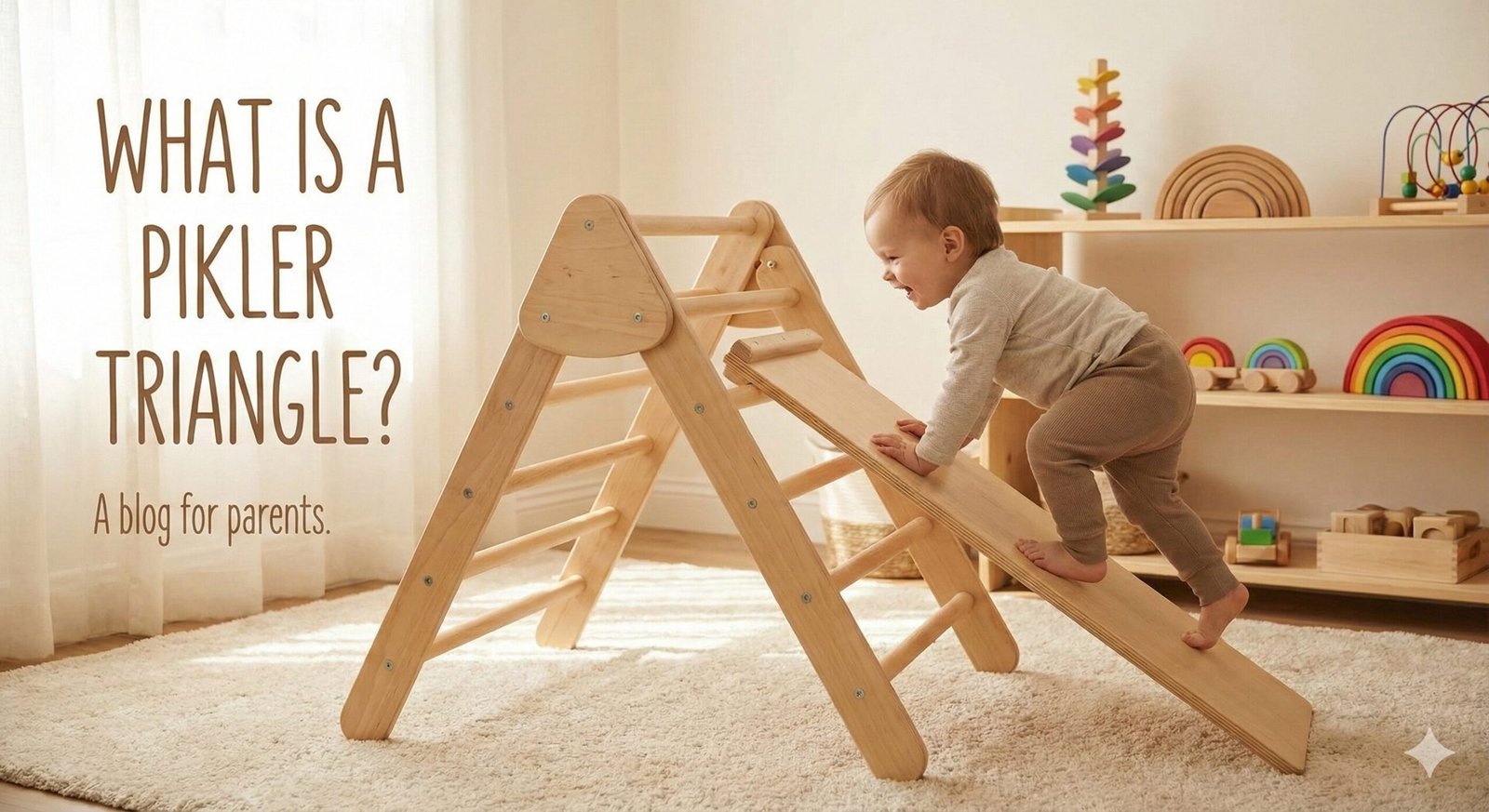
What is a Pikler Triangle? The Ultimate Montessori Climbing Guide
If you have spent any time on “Montessori Instagram” or parenting Pinterest boards, you have likely seen a simple, wooden triangular climbing frame. This is the Pikler Triangle. But it is much more than just a trendy piece of nursery furniture; it is a scientifically designed tool for child development.
At its core, a Pikler Triangle is a climbing structure for indoor use. It consists of two side rails and rung ladders, allowing children to pull up, climb, and eventually go over the top. Unlike flashy plastic toys that play music, the Pikler Triangle is passive—it requires the child to do the work, fostering independence and physical confidence.
The History: Who was Emmi Pikler?
The device was developed by Dr. Emmi Pikler, a Hungarian pediatrician, over 100 years ago. Her philosophy (The Pikler Approach) focused on the natural development of the child. She believed that children should not be put into positions they cannot get into themselves.
This means no “propping” babies up before they can sit, or lifting them onto slides they cannot climb. The Pikler Triangle was designed to act as a safe environment for this self-initiated movement. It allows a child to learn their own physical limits at their own pace, without adult interference.
Developmental Benefits
Why spend money on a wooden ladder? The benefits go far beyond just “burning energy.”
1. Gross Motor Skills
Climbing requires the coordination of the entire body. It strengthens the core, arms, and legs. It teaches proprioception—the awareness of where your limbs are in space.
2. Confidence and Risk Assessment
A child climbing a Pikler is constantly calculating risk. “Can I reach that next rung? Do I feel safe?” By allowing them to climb safely indoors (usually only 2-3 feet off the ground), they learn to trust their bodies.
3. Open-Ended Play
When not being climbed, the triangle becomes a fort, a bear cave, or a tunnel. Throwing a blanket over it transforms it instantly.
When to Start: The Age Guide
One of the best features of the Pikler Triangle is its longevity. It is suitable for children from 6 months to 5 years old.
- 6-8 Months: Babies use the rungs to pull themselves up to a standing position.
- 1-2 Years: They begin to climb halfway up and climb back down (learning the descent is harder than the ascent!).
- 2-3 Years: They master summiting the top and climbing over to the other side.
- 4+ Years: It becomes a base for imaginative play (forts, obstacle courses).
Safety Guidelines
Always place the triangle on a soft surface, like a rug or foam mat. While falls are rare when the child is in control, they can happen. Supervision is required, but “hovering” is discouraged—be close enough to catch, but far enough to let them explore.
Features to Look For
Foldable vs. Fixed
This is the biggest decision. Fixed triangles are sturdier but take up permanent floor space. Foldable triangles use a locking mechanism to fold flat for storage under a bed. For most modern homes, foldable is the only practical option.
Ramps and Slides
Many triangles come as a set with a double-sided ramp (smooth slide on one side, rock climbing holds on the other). This significantly increases the play value.
Top 3 Pikler Recommendations
Costzon Foldable Climbing Triangle with Ramp

This is the gold standard for most families. It includes the foldable triangle and a reversible ramp. The wood is smooth birch plywood, ensuring no splinters, and the locking mechanism is secure for safety.
Pros
- Folds flat for storage
- Includes slide/rock wall ramp
- High weight capacity (often 100lbs+)
Cons
- Assembly takes about 45 minutes
- Large footprint when open
Dripex Foldable Pikler
A solid entry-level option. It may lack the premium finish of boutique brands, but it is structurally sound and provides the exact same developmental benefits at a lower price point.
Check Price on Amazon