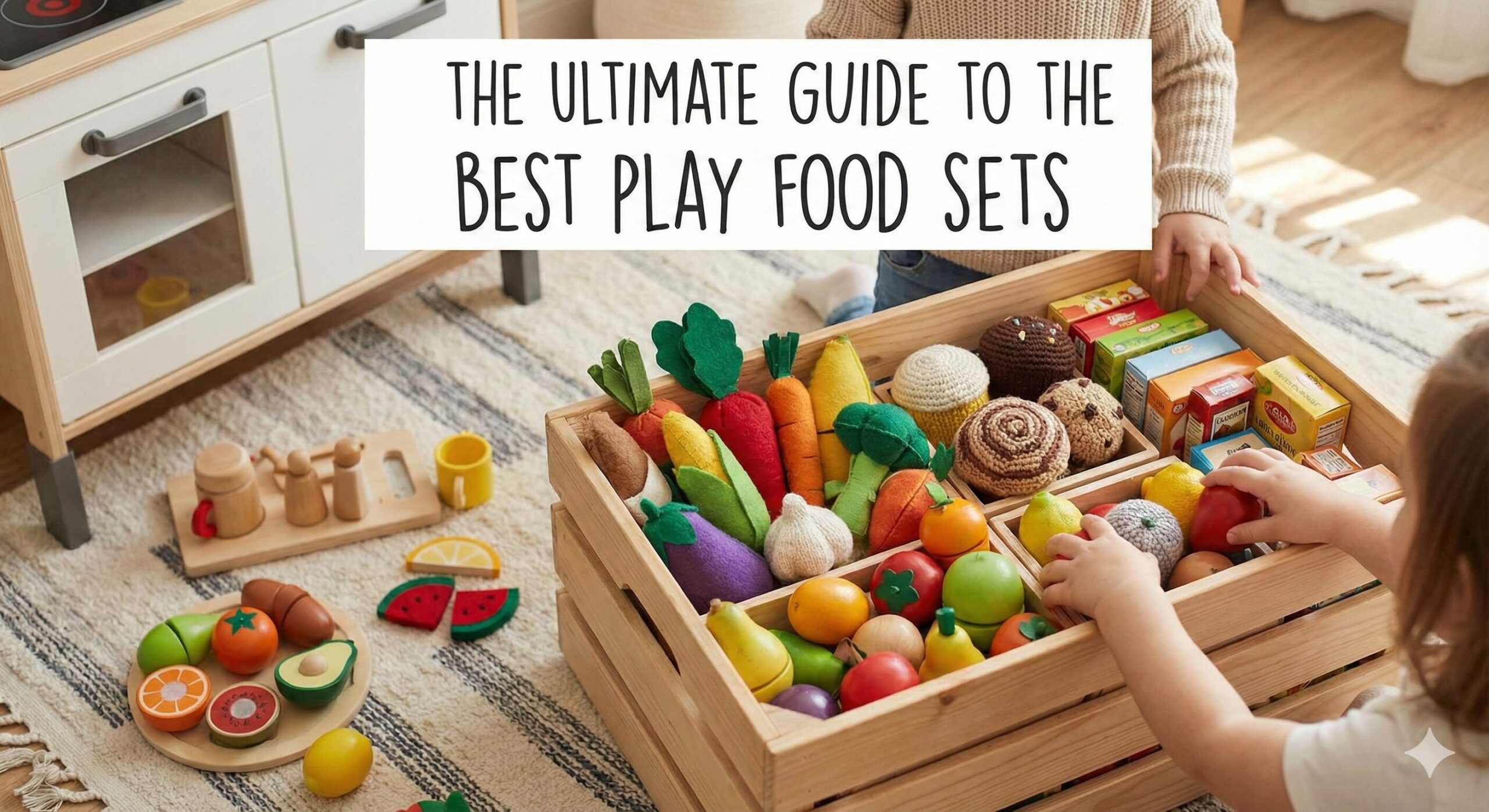
The Ultimate Guide to the Best Play Food Sets: Reviews, Safety, and DIY Fun
From realistic wooden cutting sets to soft felt feasts, discover the safest and most engaging pretend food toys for your child’s development.
There is something universally magical about a child handing you a plastic grape or a wooden sandwich and waiting expectantly for you to take a “bite.” Pretend play is not just a way to pass the time; it is a critical component of early childhood development. When children engage in culinary roleplay, they are building vocabulary, practicing fine motor skills, and learning social cues.
However, the market is flooded with options. You might be wondering, what is the best play food set? Should you go for durable wood, realistic plastic, or soft felt? And more importantly, is toy food safe for toddlers?
In this comprehensive guide, we will break down the benefits of imaginative play, review the top fake food toys for 2-year-olds and up, and even teach you how to make pretend food at home if you’re feeling crafty.
Is Toy Food Safe for Toddlers? A Safety Checklist
Before we dive into the reviews, we must address safety. When selecting the best fake food toys for toddlers, especially those still in the “mouthing” phase, you need to be vigilant about materials and size.
1. Choking Hazards
For children under 3, the biggest risk is choking. Many play food sets come with small accessories like pretend berries, removable stems, or tiny utensils. Always check the manufacturer’s age recommendation. If you are looking for the best fake food toys for 2 year olds, prioritize “chunky” items that are too large to be swallowed.
2. Material Safety (BPA and Paint)
- Plastic: Ensure it is labeled BPA-free, PVC-free, and Phthalate-free.
- Wood: Look for solid wood painted with non-toxic, water-based paints. Cheaper composite woods can sometimes contain formaldehyde glues.
- Fabric/Felt: These are generally the safest for impact (no hard edges), but ensure eyes or buttons are securely embroidered, not glued.
If you are exploring wooden toys vs plastic toys, remember that while wood is often more durable, high-quality plastic is easier to sanitize, which is a consideration for playdates.
Top 5 Best Play Food Sets Reviewed
We’ve analyzed durability, realism, and educational value to bring you the best options on the market.

1. The Classic Wooden Cutting Fruit Set
Best For: Developing Fine Motor Skills
This set is a staple in playrooms worldwide. Featuring wooden fruits connected by velcro tabs, it allows children to “slice” through them with a safe wooden knife, providing a satisfying “crunch” sound.
Pros
- Satisfying tactile feedback (Velcro crunch).
- Durable solid wood construction.
- Teaches fractions (whole, half, quarter).
- Excellent for hand-eye coordination.
Cons
- Velcro can gather lint over time.
- Heavy pieces hurt if thrown.
This set pairs perfectly if you are looking for Montessori toys that encourage practical life skills.
Check Price on Amazon

2. The Realistic “Munch It!” Plastic Basket
Best For: Variety and Durability
If you want volume and variety, high-quality plastic sets are the winner. Unlike cheap, crushable plastic, modern sets are made from rubberized, crush-resistant materials that feel soft to the touch.
Pros
- Incredibly realistic textures.
- Easy to sanitize (dishwasher safe usually).
- Softer on impact than wood.
- Huge variety of food groups included.
Cons
- Lacks the “cutting” interactivity.
- Plastic aesthetic isn’t for everyone.
This is a great starter set to fill up a pantry. If you are setting up a play area, check out these dollhouse kitchen ideas which can be scaled up for toddler kitchens.
Check Price on Amazon

3. The Soft Felt Sandwich Kit
Best Fake Food Toys for 2 Year Olds
Felt food is experiencing a renaissance. It is silent (no clattering on hardwood floors), textured, and inherently safe. This sandwich kit allows toddlers to stack lettuce, cheese, tomatoes, and meat.
Pros
- Completely silent play.
- Machine washable (check specific instructions).
- Sensory-rich texture.
- No hard edges—safest for younger toddlers.
Cons
- Can attract pet hair.
- Harder to clean sticky spills compared to plastic.
Check Price on Amazon
Comparison: Wood vs. Plastic vs. Felt Play Food
Struggling to decide? Here is a quick breakdown of how the materials compare.
| Feature | Wooden Sets | Plastic (High Quality) | Felt/Fabric |
|---|---|---|---|
| Durability | Very High | High | Medium (seams can burst) |
| Safety (Impact) | Low (Heavy projectiles) | Medium | High (Soft) |
| Realism | Stylized | Very Realistic | Artistic/Abstract |
| Best Age | 3+ Years | 2+ Years | 18 Months+ |
| Maintenance | Wipe Clean | Dishwasher/Sink | Washing Machine |
If you are interested in material comparisons in other toy categories, you might find our guide on Picasso Tiles vs Magna Tiles helpful for understanding plastic durability.
How Do You Make Pretend Food? (DIY Guide)
Maybe the best play food set isn’t one you buy, but one you create. DIY play food is cost-effective and allows for customization. Here are three popular methods.
1. Felt Sewing (The Quiet Option)
Felt is forgiving and easy to sew. You don’t need a machine; a simple needle and embroidery thread work wonders.
Method: Cut two identical shapes (e.g., a strawberry profile), stitch the edges, stuff with poly-fill, and close.
Tip: Use fabric glue for small details like seeds if you aren’t comfortable sewing.
2. Salt Dough (The Classic Craft)
Salt dough is essentially a durable, hardened bread. It’s great for making bakery items like bagels, pretzels, and cookies.
- Recipe: 2 cups flour, 1 cup salt, 1 cup water.
- Bake: 250°F (120°C) for 2-3 hours until hard.
- Finish: Paint with acrylics and seal with Mod Podge.
Note: Keep this away from pets, as the high salt content is dangerous if ingested.
3. Cardboard & Recyclables
Never underestimate a good cardboard box. You can create pizza slices, cereal boxes, or even a full kitchen. If you enjoy working with cardboard, check out our guide on how to make a dollhouse from cardboard, which uses similar techniques.
4. Sponge Cakes
Cut standard yellow kitchen sponges into triangles. Cover them with “puffy paint” or lightweight spackle colored with acrylic paint to resemble frosting. These make excellent, squishy cakes.
If you are looking for materials to create textures, similar techniques are used when determining what type of clay is used for slime or other sensory crafts.

Get Craft Supplies on Amazon
Completing the Kitchen: Accessories Matter
Food needs a place to be cooked. To get the most out of these toys, consider pairing them with:
- Cookware: Stainless steel pots and pans add a realistic “clink” sound.
- Aprons: Enhances the roleplay element.
- Shopping Carts: Perfect for gross motor skills.
For those with older children, you can integrate these items into larger setups. See our recommendations for best pretend play toys for 4 year olds to see how play evolves from simple eating to complex restaurant management.
Frequently Asked Questions
Simple plush or large plastic food is safe for children as young as 12-18 months. However, complex sets with removable parts (like velcro cutting fruit) are best for ages 3+ due to fine motor requirements and potential small parts.
Plastic food can usually go in the top rack of a dishwasher (in a mesh bag). Wooden food should only be wiped with a damp cloth and mild soap; never submerge wood. Felt food can be hand-washed or machine washed on a delicate cycle in a garment bag.
Wooden food is more durable, eco-friendly, and offers better tactile feedback for cutting. Plastic food is generally more realistic looking, cheaper, and easier to sanitize.
Yes! Many occupational therapists use pretend play to desensitize children to food textures and shapes without the pressure of eating, which can eventually translate to trying real foods.
Wrapping Up Playtime
Whether you choose the tactile crunch of a wooden cutting set, the realistic look of modern plastic, or the soft safety of felt, the best play food set is ultimately the one that captures your child’s imagination. These toys are investments in their social and cognitive future.
Start with a basic set of fruits and vegetables, and as your child grows, expand their pantry with bakery items and multicultural foods. Happy cooking!