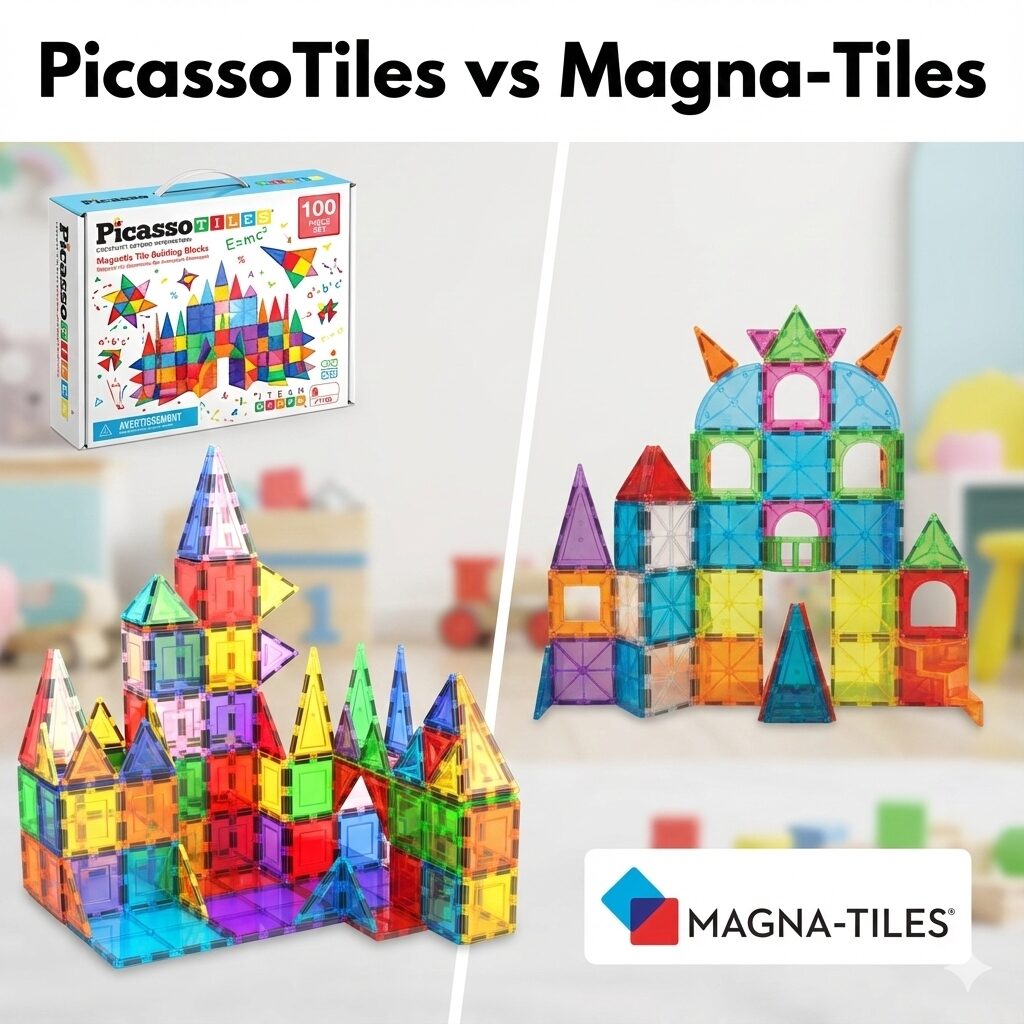
PicassoTiles vs Magna-Tiles: The Ultimate Magnetic Tile Showdown
If you have walked into a preschool, a playdate, or a toy store in the last decade, you have undoubtedly seen magnetic tiles. They are the translucent, geometric building blocks that have dethroned traditional wooden blocks in many households. But for parents standing in the toy aisle or scrolling through Amazon, a massive dilemma arises: Picasso Tiles vs Magna Tiles.
On one corner, you have Magna-Tiles, the original pioneer, known for its premium status and rivet-enforced durability. On the other, you have PicassoTiles, the budget-friendly challenger that claims to offer 99% of the fun for half the price.
Are the expensive originals worth the splurge? Or are the cheaper alternatives a hidden gem? As experts in best creative toys, we have put both brands to the test. We’ve built castles, smashed towers, and analyzed safety features to bring you this definitive comparison.
At a Glance: The Quick Verdict
Don’t have time to read the full breakdown? Here is the cheat sheet comparing the two titans of the magnetic building world.
| Feature | Magna-Tiles (The Original) | PicassoTiles (The Challenger) | Winner |
|---|---|---|---|
| Price Point | Premium ($1.00 – $1.20 per piece) | Budget ($0.40 – $0.60 per piece) | PicassoTiles |
| Magnet Strength | Strong & Consistent | Strong (Comparable to Magna-Tiles) | Tie |
| Durability/Safety | Reinforced with metal rivets | Strong glue (No rivets) | Magna-Tiles |
| Clarity & Color | Crystal clear, vivid colors | Slightly hazier, varies by batch | Magna-Tiles |
| Variety | Polygons, rects, themed sets | Marble runs, racetracks, bristlebricks | PicassoTiles |
The Contenders Explained
Magna-Tiles: The Gold Standard
Magna-Tiles were invented by a Japanese mathematics teacher and brought to the US in 1997. For years, they held a monopoly on the market. They are renowned for their safety features—specifically, the metal rivets in each corner that secure the magnets inside the plastic casing. They are often found in classrooms and museums because they can withstand years of heavy abuse.
PicassoTiles: The Value King
PicassoTiles entered the scene later, positioning themselves as a more affordable alternative. They use a similar plastic mold and magnet structure but manufacture their tiles differently to cut costs. They have expanded aggressively into niche sets, offering everything from marble runs to space-themed toys that integrate with the tiles.

Head-to-Head: Deep Dive Comparison
1. Build Quality and Safety (Rivets vs. Glue)
This is the single biggest technical difference between the two brands. Magna-Tiles use metal rivets to hold the two plastic halves of the tile together. This mechanical bond is extremely difficult to break. If you step on a Magna-Tile, it might crack, but it rarely shatters open to release the small magnets (which are a safety hazard if swallowed).
PicassoTiles do not use rivets. They rely on high-strength ultrasonic welding (glue). While they are still very strong and generally considered safe for pretend play toys for 4-year-olds and up, there is a slightly higher risk of the tile splitting open if thrown violently against concrete. For rough toddlers, Magna-Tiles offer slightly more peace of mind.
2. Magnet Strength
A common myth is that the cheaper tiles have weaker magnets. In our testing, the difference is negligible. Both brands use small neodymium magnets capable of holding substantial weight. You can build tall towers with both.
However, newer versions of Magna-Tiles (like the “Metropolis” sets) have slightly stronger magnets than their vintage sets. PicassoTiles are remarkably consistent, holding their own even in complex structures like castles fit for a Disney Princess.
3. Price and Value
Here is where PicassoTiles dominates. A standard 100-piece set of Magna-Tiles can cost upwards of $120. A comparable 100-piece set of PicassoTiles often retails for around $50 (and frequently goes on sale).
For the price of one Magna-Tiles starter set, you can get a massive PicassoTiles castle set plus add-ons. If you are trying to build a massive fleet of pirate ships or sprawling cities, your budget goes twice as far with Picasso.
4. Compatibility
The Good News: Yes, they are compatible! The polarity and size (3-inch base for squares) are standard across most major brands (including Connetix and Playmags). You can mix and match them seamlessly.
Many parents start with a small set of Magna-Tiles gifted by grandparents, then bulk up the collection with affordable PicassoTiles. The only slight difference is the weight; Magna-Tiles feel slightly heavier and denser.
Educational Value and Imaginative Play
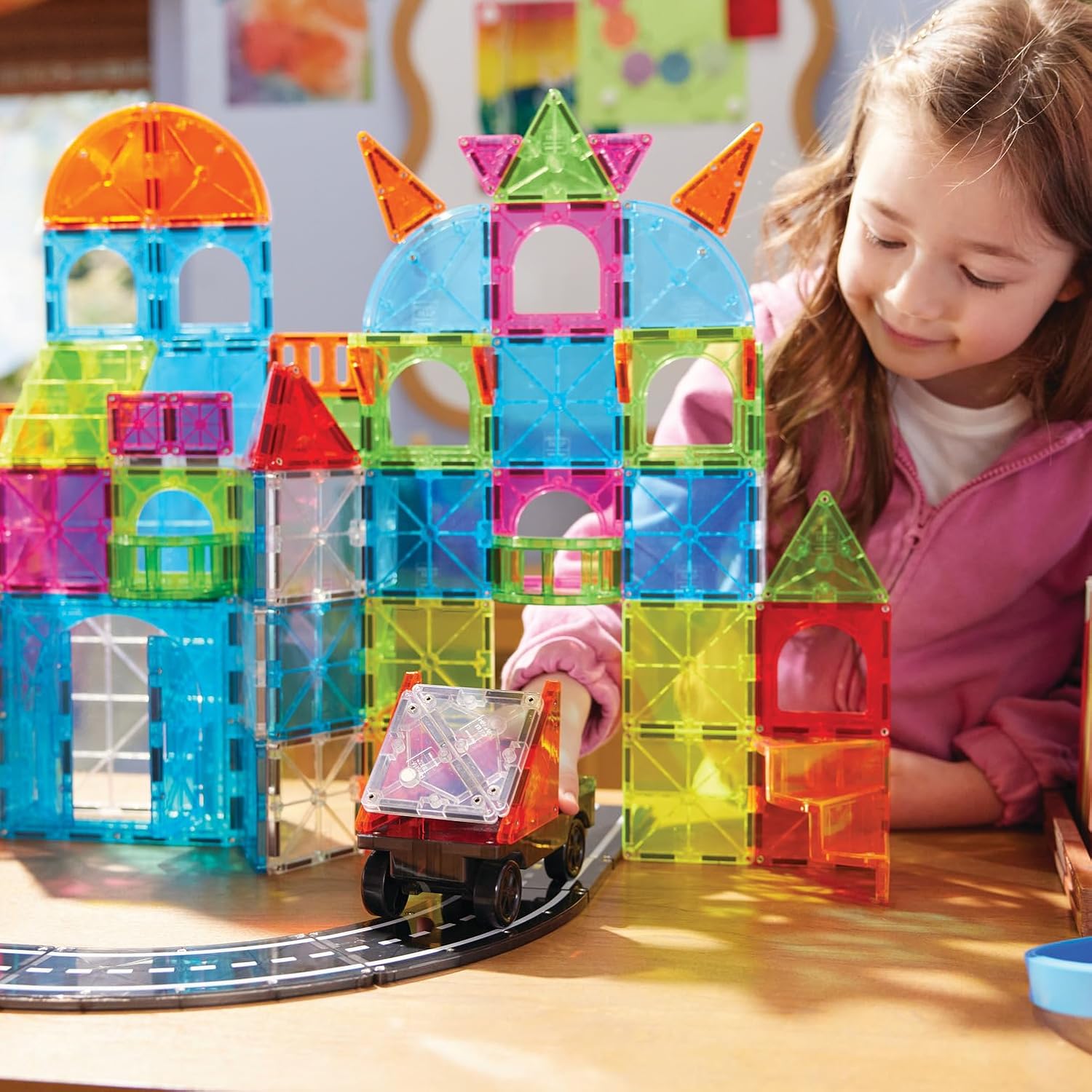
Regardless of which brand you choose, magnetic tiles are among the best open-ended toys available. They are fantastic for developing spatial awareness, geometry skills, and engineering concepts.
We often discuss what pretend play is and why it is vital for development. Magnetic tiles serve as a canvas. One minute they are a garage for Disney LEGO cars, and the next they are a backdrop for a Barbie dollhouse extension.
PicassoTiles wins points here for creativity due to their unique expansion packs. They offer:
- Marble Run Sets: Tubes that snap into the magnetic tiles.
- Race Track Sets: Tiles with grooves for battery-operated cars.
- Bristol Shape Sets: Hedgehog-style blocks that interlock.
These specialized sets allow children to engage in complex construction play that rivals the benefits of imaginative play seen in traditional building blocks.
Pros and Cons Breakdown
Magna-Tiles
Pros
- Rivets for Safety: The safest option for younger toddlers or rough play.
- Durability: Virtually indestructible.
- Clarity: High-quality plastic that looks like stained glass.
- Resale Value: Holds value well on the second-hand market.
Cons
- Price: Very expensive per tile.
- Less Variety: Fewer “gimmick” sets like marble runs compared to competitors.
PicassoTiles
Pros
- Affordability: Best bang for your buck.
- Variety: Incredible range of add-ons (tunnels, LEDs, tracks).
- Weight: Slightly lighter, making it easier to build taller structures before collapse.
- Compatibility: Works perfectly with Magna-Tiles.
Cons
- No Rivets: Relies on glue; theoretically less secure against shattering.
- Scratching: Plastic tends to scratch and fog up faster than Magna-Tiles.
Final Verdict: Which Should You Buy?
After testing both extensively, the answer depends on your budget and your child’s age.
Choose Magna-Tiles If:
You are buying for a younger child (under 3) where safety is the absolute paramount concern, or if you want a heritage toy set that will last for generations. If money is no object, the build quality and clarity of Magna-Tiles are undeniably superior. They feel like a premium product.
Choose PicassoTiles If:
You want to build BIG. For the price of a small Magna-Tiles set, you can fill a playroom floor with PicassoTiles. For children aged 4+, PicassoTiles are the smarter buy. The lack of rivets is rarely an issue for school-aged kids, and the sheer volume of tiles you get allows for much more creativity. If you are looking for the best creative toys on a budget, PicassoTiles is the winner.
Our Recommendation: Start with a sturdy foundation of Magna-Tiles if you have toddlers, and expand the collection massively with PicassoTiles as they grow.
Ready to Build?


Frequently Asked Questions
Are Picasso Tiles compatible with Magna-Tiles?
Yes, absolutely. The magnets align perfectly, and the sizing is identical. Many families mix brands without realizing which is which.
Which is safer?
Magna-Tiles takes the edge on safety due to the metal rivets. If you have a child who still mouths toys or throws them violently, the riveted construction of Magna-Tiles provides better security against loose magnets.
Why are Magna-Tiles so expensive?
You are paying for the original patent quality, the riveted safety design, higher grade ABS plastic, and the brand reputation. They maintain strict quality control standards that justify the premium price tag.
Can these tiles work with Lego?
Directly? No. However, there are specific “adapter tiles” available from third-party sellers that have Lego studs on one side and magnets on the edges, allowing you to combine Disney LEGO sets with your magnetic structures.
The Bottom Line
The battle of Picasso Tiles vs Magna Tiles ends with a win for the consumer. Having a budget-friendly option like PicassoTiles has made this incredible STEM toy accessible to millions more families. Whether you choose the premium durability of Magna-Tiles or the expansive value of PicassoTiles, you are investing in one of the best creative toys a child can own.
Our advice? Buy a small set of Magna-Tiles to test the waters, and when your kids get hooked (and they will), expand your city with PicassoTiles.
Shop All Magnetic Tiles on Amazon