Playmags vs Magna-Tiles: Which Magnetic Tile Set Rules the Playroom?
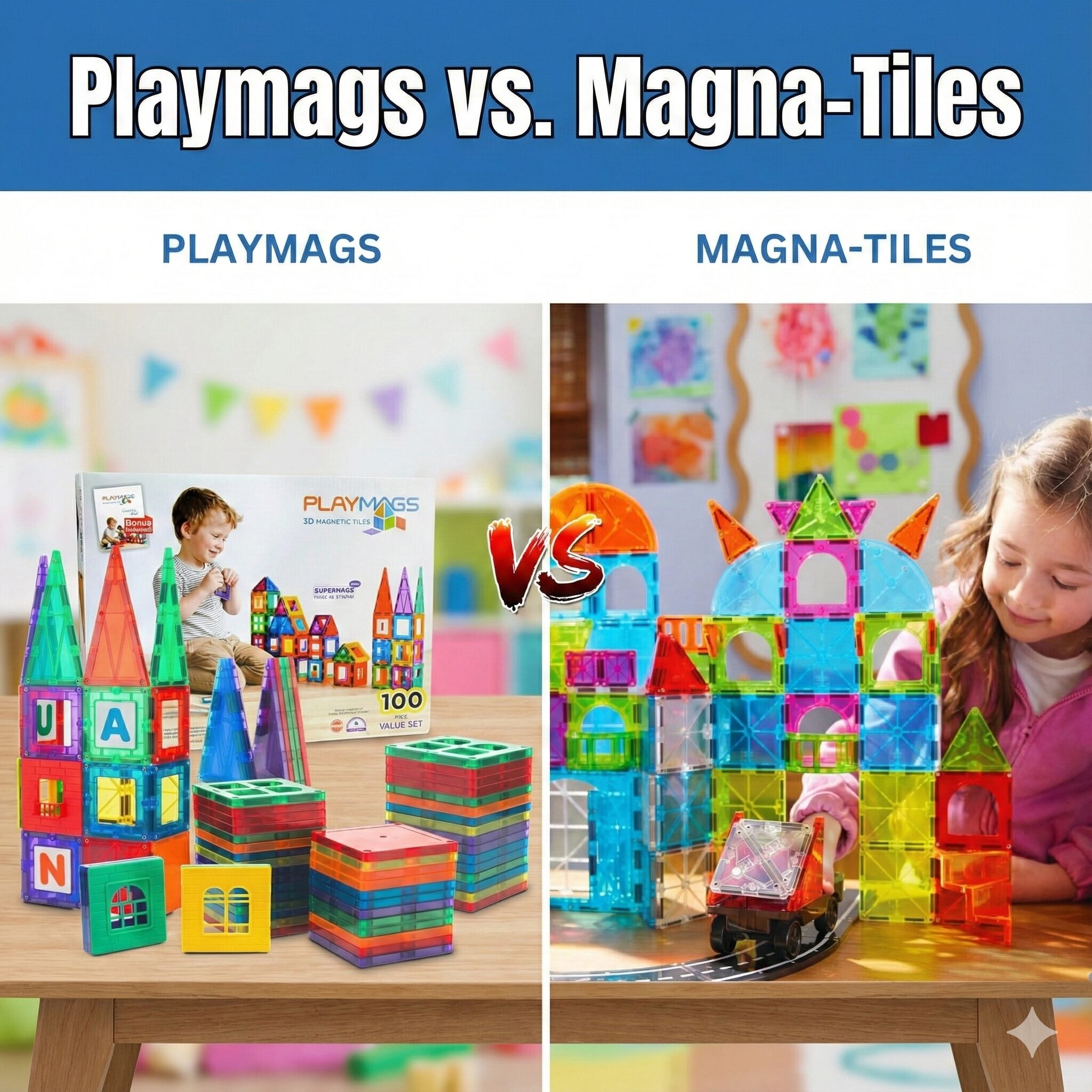
If you have a child aged three or older, you’ve likely heard the thunderous crash of a magnetic castle crumbling in the living room. Magnetic tiles have become the gold standard for open-ended creative toys, rivalling even LEGO in their ability to engage children for hours. But when it comes to stocking your playroom, parents hit a major roadblock: the brand battle.
In one corner, we have Magna-Tiles, the original, premium brand that started the craze. In the other corner, Playmags, the plucky challenger offering stronger magnets and unique accessories at a lower price point.
Is the premium price of Magna-Tiles worth it? Or does Playmags offer a better bang for your buck? In this comprehensive Playmags vs Magna-Tiles comparison, we are breaking down durability, magnet strength, design, and safety to help you decide which set deserves a spot in your toy chest.
At A Glance: The Tale of the Tape
Before we dive into the deep analysis, here is a quick overview of how these two heavyweights stack up against each other.
| Feature | Magna-Tiles (The Original) | Playmags (The Challenger) |
|---|---|---|
| Price Point | $$$ (Premium) | $$ (Mid-Range/Budget) |
| Magnet Strength | Strong (Balanced for ease of use) | Very Strong (Better for tall towers) |
| Tile Design | “X” Lattice (Metal rivets) | Various patterns (Metal rivets) |
| Unique Features | Polished clarity, themed sets | “Click-ins” (letters/windows), Domes |
| Weight | Lighter feel | Slightly heavier |
| Compatibility | Universal standard | Compatible with Magna-Tiles |
The Contenders: Who Are They?
Magna-Tiles: The Gold Standard
Magna-Tiles are often referred to as the “Kleenex” of magnetic tiles. Invented by a Japanese math teacher, they were brought to the US in 1997. They focus heavily on safety, smooth edges, and high transparency. If you are looking for a toy that feels like an heirloom, this is usually where parents start.
Playmags: The Innovator
Playmags entered the market later, identifying gaps in the original design—specifically regarding magnet strength and accessory variety. They are famous for their “Click-in” system, which allows kids to snap letters and numbers into the hollow windows of the tiles, adding an educational layer that goes beyond just building structures.

Round 1: Magnet Strength and Stability
The most frustrating experience for a child is building a masterpiece only to have it collapse because the magnets were too weak to hold the weight. This is the most critical category in our magnetic tile comparisons.
Playmags
Playmags has a reputation for packing a punch. Their magnets are generally larger and stronger than the classic Magna-Tiles. If your child is obsessed with building sky-high towers or expansive bridges, Playmags holds the advantage. The extra magnetic force helps counteract gravity when building vertically.
Magna-Tiles
Magna-Tiles are perfectly calibrated. While they might feel slightly “weaker” than Playmags in a direct pull test, they are designed this way intentionally. They are strong enough to hold, but easy enough for a toddler with limited fine motor skills to pull apart without frustration. However, for sheer vertical height, you might need more structural reinforcements than with Playmags.
Winner: Playmags (for pure strength), but Magna-Tiles wins for toddler handling.
Round 2: Design, Clarity, and Scratch Resistance
When the sun hits a magnetic castle, you want it to look like stained glass. This visual sensory input is a massive part of imaginative play.
The Look
Magna-Tiles are famous for their crystal-clear transparency and vibrant colors. They use a high-quality plastic that looks like a gem. They also feature a signature metal rivet in the corners for safety.
Playmags are also colorful but can sometimes appear slightly hazier or have a different hue saturation compared to the crispness of Magna-Tiles. However, Playmags includes the “Click-in” window feature, which necessitates a slightly different border design.
Scratch Resistance
All magnetic tiles will scratch over time—it is the nature of the toy. However, Magna-Tiles generally use a distinctive cross-lattice (“X”) design inside the tile that helps maintain structural integrity and hides scratches better than the flat surfaces found on some budget competitors.

Round 3: Shapes, Accessories, and Educational Add-ons
Once you have the basic squares and triangles, kids want to expand. Whether they are building a garage for their space toys or a castle for a princess, variety matters.
Playmags Unique Features
- Click-ins: This is Playmags’ ace in the hole. These are plastic tiles with letters, numbers, or pictures that snap *inside* the magnetic frames. It turns building into a literacy or math lesson.
- Stabilizer Board: Playmags sets often come with a large building plate, which is essential for moving creations around.
- Domes and Windows: They offer unique architectural shapes that are hard to find elsewhere.
Magna-Tiles Unique Features
- Themed Sets: Magna-Tiles has partnered with major brands and themes. You can find “Dino World,” “Safari,” and “Arctic” sets with magnetic animals.
- Special Textures: They offer glitter tiles, glow-in-the-dark sets, and mirrored tiles.
If you want educational inserts, Playmags wins. If you want animal figurines and character themes (perhaps to go with Disney Villain figures or similar play), Magna-Tiles wins.
Round 4: Safety and Durability
For parents, safety is non-negotiable. Loose magnets are extremely dangerous if swallowed.
Both Magna-Tiles and Playmags utilize ultrasonic welding and metal rivets to secure the magnets. In the early days of magnetic toys, tiles would simply be glued, which led to accidents. Now, both of these top-tier brands use mechanical locks (rivets) to ensure the magnets stay inside even if the tile drops on a tile floor.
We consider both brands to be safe for the 3+ age range. However, because Magna-Tiles is the “original,” their quality control is often perceived as the benchmark for the industry.
Tip: If you are looking for toys for younger children, check out our guide on pretend play toys for 4-year-olds.
Round 5: Price and Value
Here is where the decision usually happens.
Magna-Tiles commands a premium price. You are paying for the brand trust, the impeccable finish, and the resale value. A 100-piece set can be a significant investment.
Playmags generally costs significantly less per tile. You can often get a larger set with more unique shapes and a stabilizer board for the price of a medium Magna-Tiles set. For families looking to build a massive collection without breaking the bank, Playmags is the logical choice.

Pros and Cons Breakdown
Magna-Tiles
Pros
- Highest quality plastic clarity
- Extremely consistent quality control
- Great resale value
- Amazing themed sets (Dinos, etc.)
- Perfect magnet strength for toddlers
Cons
- Most expensive option on the market
- Magnets aren’t the strongest for huge towers
Playmags
Pros
- Stronger magnets allow for taller builds
- “Click-in” educational accessories are brilliant
- Excellent value for money
- Includes stabilizer boards in larger sets
Cons
- Plastic feels slightly less “premium” than Magna-Tiles
- Can scratch slightly easier
Are They Compatible? (The Mix & Match Test)
This is the most common question we get. Yes, Playmags and Magna-Tiles are 100% compatible.
You can snap a Playmags square to a Magna-Tiles triangle without issue. The polarity of the magnets works, and the edge lengths are standard (3 inches for the square). This means you don’t have to choose just one brand forever. You can start with a Magna-Tiles base set and expand with a bulk Playmags set to get more pieces for less money.
This is great news if you already have sets from other brands like PicassoTiles. For a deeper look at cross-brand compatibility, read our PicassoTiles vs Magna-Tiles comparison.
Final Verdict: Which One Should You Buy?
Choosing between Playmags and Magna-Tiles comes down to your budget and your child’s building style.
Buy Magna-Tiles If:
- You want the absolute safest, highest-quality finish available.
- You are buying a gift and want the “brand name” recognition.
- Your child loves themed play (Dinos, Jungle Animals) more than abstract architecture.
- You plan to resell the tiles once your kids outgrow them (Magna-Tiles hold value well).
Buy Playmags If:
- You want the most building power for your dollar.
- Your child is frustrated by towers falling down (the stronger magnets help here).
- You love the idea of the educational “Click-in” letters and numbers.
- You need a massive amount of tiles to build huge castles or structures for dolls.
Our Recommendation: If budget allows, start with a Magna-Tiles set to appreciate the quality, then expand your collection with Playmags to get the bulk volume needed for epic creations.

Frequently Asked Questions
No. Playmags uses a riveting process similar to Magna-Tiles to keep the magnets encased safely. While no toy is indestructible, they are built to withstand standard playroom abuse.
Not directly. Magnetic tiles and LEGO bricks are two different systems. However, combining them in play is excellent for development. See our review on Disney LEGO sets for ideas on how to integrate different building toys.
The sweet spot is ages 3 to 8. However, older kids often enjoy complex engineering challenges with them. They are a staple of pretend play and STEM learning.
Playmags “Click-ins” are designed to be a tight fit so they don’t fall out during play. Younger children (under 4) might need parental help snapping them into the window frames.
Conclusion
Whether you choose the heritage quality of Magna-Tiles or the innovative strength of Playmags, you are making a great choice for your child’s development. These toys foster spatial reasoning, creativity, and patience.
Don’t stress too much about the brand loyalty—the beauty of the magnetic tile world is the compatibility. Start building today, and watch your child’s imagination soar, perhaps even to magical fairy worlds or distant galaxies.