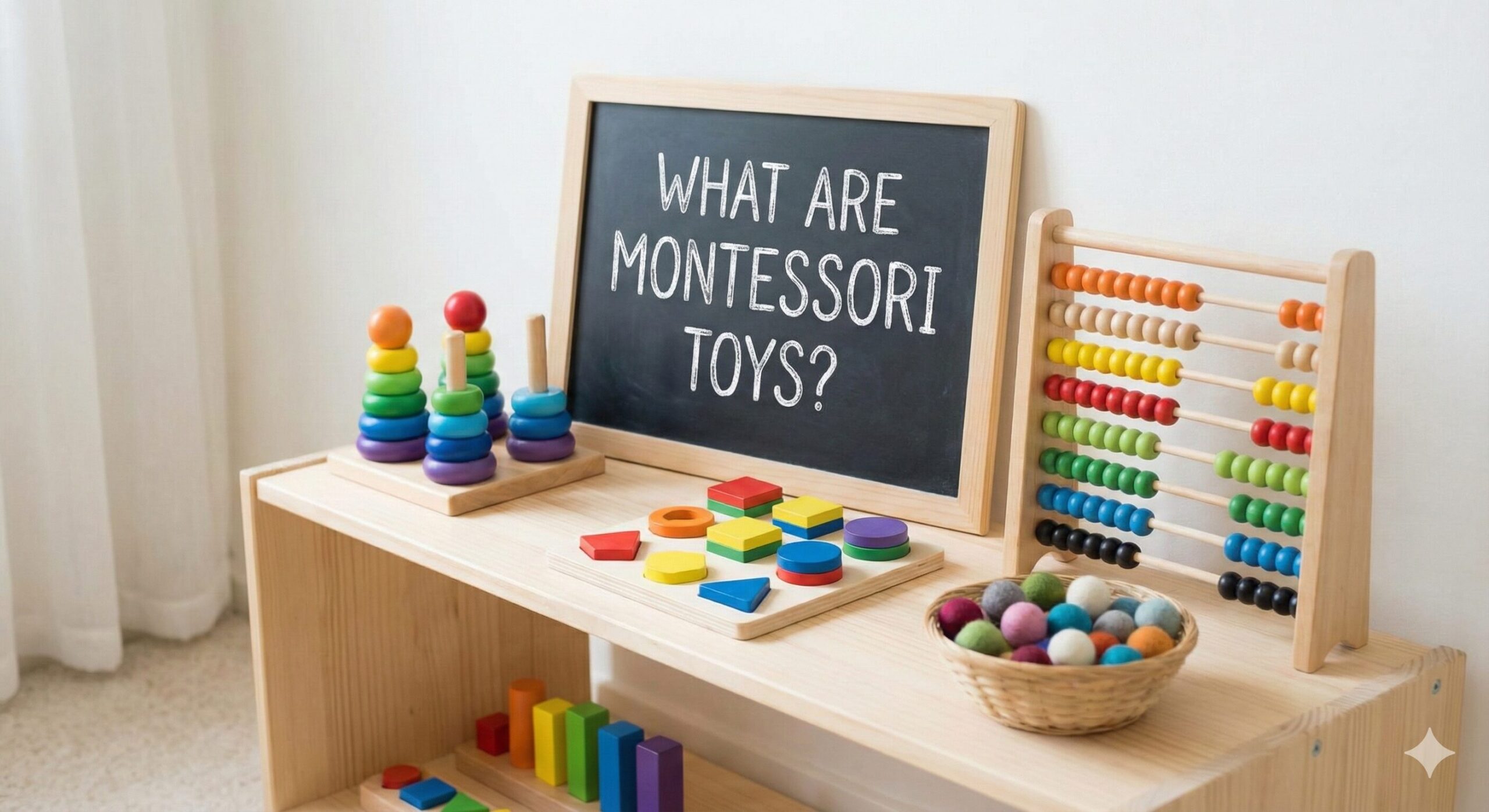
What Are Montessori Toys? A Comprehensive Guide to Brands, Benefits, and Philosophy
In a world overflowing with flashing lights, loud noises, and plastic screens, a quiet revolution has been taking place in playrooms across the globe. Parents are increasingly turning away from over-stimulating gadgets and embracing the “less is more” philosophy of Montessori toys. But what exactly defines a toy as Montessori? Is it just about being made of wood, or is there a deeper developmental science at play?
Whether you are setting up a nursery or looking to revamp your toddler’s playroom, this guide dives deep into the philosophy, benefits, and best brands of Montessori toys, helping you make informed decisions for your child’s development.
Defining the Philosophy: What Are Montessori Toys?
Technically speaking, Maria Montessori never created a line of “toys.” She developed “materials” for learning. However, in the modern context, a Montessori toy is any play object that aligns with the educational philosophy developed by Dr. Maria Montessori in the early 1900s. These toys are designed to encourage independence, concentration, and a firm grasp of reality.
Unlike conventional toys that entertain a passive child (think of a battery-operated dog that barks when you press a button), Montessori toys require the child to be active. They are tools for learning about the world, physics, math, and practical life skills. If you are curious about how these differ from standard playroom items, you might want to explore the detailed comparison of Montessori toys vs. regular toys.
The 5 Core Characteristics
- Simplicity: They do not overwhelm the child with too much sensory input (no flashing lights or loud music).
- Realism: They reflect the real world. A Montessori play kitchen looks like a kitchen, and figurines look like real animals, not caricatures.
- Natural Materials: They are predominantly made of wood, metal, glass, or fabric—rarely plastic.
- Control of Error: Many Montessori toys are self-correcting. For example, a cylinder block puzzle only fits one way. The child knows they made a mistake without an adult telling them.
- Isolation of a Quality: The toy focuses on teaching one skill at a time (e.g., size differentiation) rather than mixing colors, shapes, and numbers all at once.
Why Are Montessori Toys Wooden?
One of the most common questions parents ask is, “Why is everything beige and wooden?” While the aesthetic is undeniable, the reasoning goes beyond Instagram-worthy shelfies. The preference for wood over plastic is rooted in sensory education and respect for the environment.
Sensory Feedback and Weight
Plastic toys often feel the same regardless of their size—light and somewhat hollow. Wooden toys have “heft.” A small wooden block feels different from a large one, providing the child with accurate proprioceptive feedback (the sense of weight and body position). This helps refine their motor skills and understanding of physics.
Furthermore, wood warms to the touch and has a texture that plastic lacks. For a deeper dive into the durability and developmental differences, read our analysis on wooden toys vs. plastic toys.
Sustainability and Durability
Montessori teaches respect for the environment. Wooden toys are generally more sustainable and durable, often becoming heirlooms passed down through generations. They do not break easily, teaching children to value quality over disposable quantity.

Start Your Wooden Collection
Classic Wooden Rainbow Stacker for Sensory Development. Non-toxic paint and sustainable wood.
Check Price on AmazonThe Benefits of Montessori Toys
Why should you invest in these often pricier items? The return on investment comes in the form of your child’s developmental milestones and behavior.
1. Enhanced Concentration and “Deep Work”
Because these toys are simple and passive (waiting for the child to activate them), they encourage extended periods of focus. When a child is engaged in a repetitive task, like threading beads or stacking blocks, they enter a state of “flow.” This is the foundation of a good attention span later in school.
2. Encouragement of Creative and Imaginative Play
There is a misconception that Montessori discourages imagination. In reality, it grounds imagination in reality first. Once a child understands the real world, they can manipulate it creatively. Open-ended toys like wooden blocks or silk scarves allow for infinite possibilities. For more on this vital developmental stage, check out our guide on the benefits of imaginative play.
3. Development of STEM Skills
Montessori materials are mathematically precise. Unit blocks, geometric solids, and fraction puzzles introduce complex math and physics concepts physically long before a child sees them on a chalkboard.
4. Independence and Confidence
Because many Montessori toys include a “control of error,” children can play independently without constantly asking, “Did I do this right?” Solving a problem on their own boosts self-esteem.
What Makes a Toy “Montessori”? A Checklist
Not every wooden toy is Montessori, and not every plastic toy is anti-Montessori. Here is how to evaluate a toy before you buy:
| Feature | Montessori Aligned | Not Aligned |
|---|---|---|
| Action | Child activates the toy | Toy moves/makes noise on its own |
| Purpose | Teaches a specific skill (isolation) | Tries to teach shapes, colors, and ABCs simultaneously |
| Aesthetics | Natural, organized, calm | Cluttered, neon colors, cartoonish |
| Reality | Based on real life (truck, broom, animal) | Fantasy-based (talking unicorn, flying superhero) |
It is worth noting that as children grow, the strict rules on fantasy relax. However, for children under 6, Montessori emphasizes reality. If you are looking for toys that bridge the gap between strict Montessori and modern play, you might look into magnetic tiles like Picasso Tiles vs Magna-Tiles, which are excellent for geometry and construction despite being plastic.
Montessori Figurines: The Importance of Realism
One specific category where Montessori shines is figurines. Montessori figurines are anatomically correct, realistically painted, and proportional models of animals, insects, or people.
Why avoid cartoons? Dr. Montessori believed that young children are still learning what the world is. Presenting them with a pig that wears a vest and drives a car can be confusing. Realistic figurines help children categorize the natural world.
These figurines are often used in “language baskets” or for matching activities with cards. While older children might enjoy Disney Villains or Disney Princess dolls, the Montessori toddler shelf usually features lifelike lions, cows, and sea creatures.
Even when exploring themes like history or adventure, realism is key. For example, rather than a fantasy pirate ship, a Montessori approach might involve a realistic model boat or map-reading tools. However, if you are looking for thematic play, you can find high-quality options in our review of the best pirate toys, selecting those that lean more toward historical reenactment than cartoon fantasy.

Realistic Animal Sets
High-detail, hand-painted farm and jungle animal figurines perfect for vocabulary matching cards.
Check Price on AmazonMontessori Toys by Age: A Quick Guide
Babies (0–12 Months)
For infants, the focus is on sensory exploration and motor skills.
- Munari Mobile: High-contrast visuals.
- Wooden Rattles: Simple cause and effect.
- Object Permanence Box: Teaches that things exist even when unseen.
Toddlers (1–3 Years)
This is the age of “practical life” and gross motor skills.
- Cleaning Sets: Functional brooms and mops.
- Pikler Triangle: For climbing and gross motor development.
- Simple Puzzles: Knob puzzles with isolated shapes.
- See our guide on pretend play toys for ideas that can be adapted for older toddlers transitioning to preschool.
Preschoolers (3–6 Years)
Here, the focus shifts to refinement of senses, language, and math.
- Sandpaper Letters: Tactile preparation for writing.
- Moveable Alphabet: Building words before reading.
- Open-Ended Construction: While Disney LEGO sets are popular, Montessori classrooms prefer generic bricks or architectural blocks that don’t force a specific narrative.
Top Montessori Toy Brands
You don’t need to buy from a specific brand to be Montessori-aligned, but these companies consistently produce high-quality, compliant materials.
1. Lovevery
Famous for their subscription kits, Lovevery takes the guesswork out of developmental stages. Their items are research-backed and aesthetically pleasing.
2. Grimm’s Spiel & Holz
Known for their famous wooden rainbow, Grimm’s produces heirloom-quality wooden toys with non-toxic stains that allow the wood grain to show through.
3. Melissa & Doug
While they make all kinds of toys, their “Dust! Sweep! Mop!” set and wooden food crates are staples in Montessori homes for practical life play. They are a great entry point for creative toys that remain grounded in reality.
4. PlanToys
PlanToys uses sustainable rubberwood and organic pigments. They are leaders in eco-friendly manufacturing and offer excellent water play and musical sets.
5. Hape
Hape offers a massive range of bamboo and wooden toys. Their marble runs and simple musical instruments are fantastic for cause-and-effect learning.
Are Montessori Toys Better? The Verdict
The question of “better” is subjective, but research into child development favors the attributes of Montessori toys—specifically active engagement over passive entertainment.
✅ The Pros
- Encourage longer attention spans.
- Foster independence and problem-solving.
- Durable and eco-friendly.
- Aesthetically pleasing in the home.
- High resale value.
❌ The Cons
- Higher upfront cost.
- Can be harder to find in big-box stores.
- Might seem “boring” to children used to high-stimulation electronics (initially).
It is important to find a balance. You might have a Montessori-style shelf but still own a Barbie dollhouse or a space toy that sparks a specific interest. The goal is to make the majority of the play environment conducive to focus and creativity.
Frequently Asked Questions
A: The main purpose is to encourage independence, concentration, and skill development through active play. They are designed to be self-correcting and isolate specific learning concepts.
A: While wood is preferred for its sensory properties and durability, Montessori toys can also be made of metal, glass, fabric, or stone. The key is that they are natural materials rather than synthetic plastic.
A: Yes! Many families practice “Montessori at home” which is flexible. You can have a core of Montessori materials while still allowing some conventional toys, provided they don’t overstimulate the child.
A: You can start from birth. High-contrast mobiles and simple wooden rattles are designed specifically for newborns to aid in visual tracking and grasping reflexes.
Final Thoughts: Building a Prepared Environment
Adopting a Montessori approach to toys doesn’t mean you have to throw away every plastic item in your house. It is about being intentional. By choosing toys that are passive, realistic, and made of natural materials, you are giving your child the tools they need to understand the world around them.
Whether you start with a simple set of wooden blocks, realistic animal figurines, or practical life tools, the benefits of Montessori toys—focus, independence, and joy in learning—will serve your child for a lifetime.
Ready to transform your playroom? Start small, observe what your child is drawn to, and remember: the toy is just the tool; the child is the builder.

The Ultimate Montessori Starter Set
Get a curated box of age-appropriate developmental tools delivered to your door.
Check Price on Amazon